OCTOBER
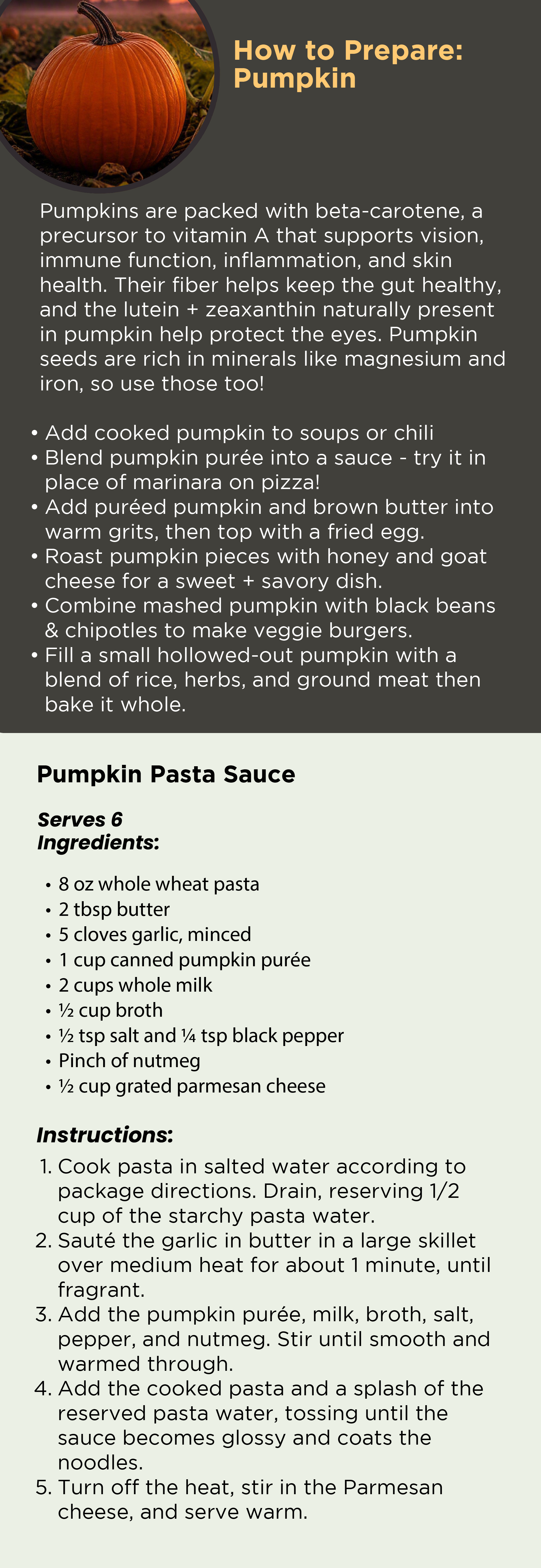
Cozy soups & warming, nourishing meals are everywhere as the weather turns cooler and we are here for it! The produce options this time of year are perfect for warm, deeply nourishing meals - winter squash, pumpkin, sweet potatoes, root vegetables (beets, carrots, parsnips), Brussels sprouts, cabbage and apples. Of course, soups and stews are a great option with these, but so is roasting to bring out the natural sweetness, mashing them with garlic & fresh herbs, or using them in sauces. Your imagination is the limit-let’s get cozy and creative!

Smarter Fat: Choosing the Right Fats
How do you feel about fat? If you grew up in the 80's or 90's maybe you have it in your head that fat is bad. If you grew up in the early 2000's, you may have a different view. Fat has been both praised and villainized, repeatedly. So today we’re setting the record on fats straight - what it does and how to choose the healthiest ones. “Fat” is a catchall term, but fats can be broken down further into saturated, trans, polyunsaturated (PUFA) and monounsaturated (MUFA) fats. All fat is calorie dense, with 9 calories per gram. Fats help slow down digestion and trigger satiety and appetite control hormones so you feel full for longer. Fat is essential- it is required for many bodily functions. It helps the body absorb and store fat soluble vitamins A, K, D and E. It is needed for cell membranes to protect nerves, blood clotting & healthy muscles. But, different fats have different effects on the body. MUFAs, found in nuts, seeds, avocado, olives/olive oil, should be your main fats, there is a lot of research behind their health benefits like improved cholesterol profiles & insulin sensitivity. PUFAs have a subgroup of fatty acids known as omega-3 fatty acids. They are found in fatty fish, chia, flax and walnuts and are beneficial for the heart and brain. Saturated fats, found in animal products, like red meat and full fat dairy, raises both good and bad cholesterol. When saturated fats replace highly processed carbs, they may lower the risk of heart disease, but replacing saturated fats with MUFAs lowers the risk further. Trans fats lead to inflammation, increase bad cholesterol, and contribute to insulin resistance & heart disease.
NUTRITION TAKE-AWAY
Fat is an essential nutrient, meaning we need to get it as part of our diet. It is important for many bodily functions.
Some fats - Mono and Poly unsaturated fats - offer health benefits. Saturated fat can be part of a healthy diet, but trans fats should be avoided.